
“You have to understand the revolution of psychoanalysis as the idea that everything we represent both conceals something about our being-and-becoming as much as it reveals it. Once you are open to that, you, in a way, have entered the world in which free association is necessary, because free association, in my frame of reference, is not just uncensored talking. It’s not just that. It’s something that very specifically unsettles the rationality and the realism of discourse, such that it allows dimensions that were occluded or more accurately repressed than suppressed to come to the surface to a greater degree. In other words, we practice free association because it’s freeing, and it’s freeing of something that is essential to our being.”
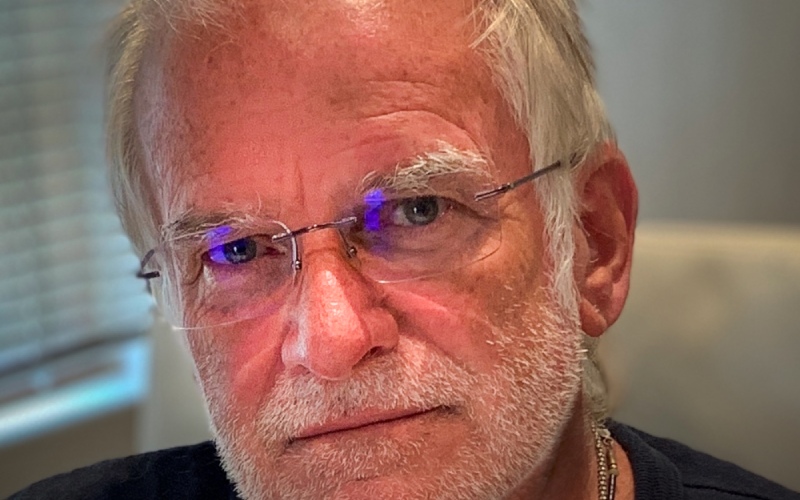
Barnaby Barratt, PhD, DHS
Johannesburg
Episode Description:
Barnaby begins by describing how free association is a process that is not limited to speaking with increasingly less censorship. It is a process that is foundationally disruptive to the “repetitiously-compulsive way in which ‘knowledge’ has impeded the movement of being-becoming.” He sees psychoanalysis less as a process of learning about oneself, an epistemological enterprise, and more as an opportunity of expanding one’s sense of self, an ontological experience. As such, Barnaby sees free association as “inherently anti-technical, anti-theoretical and anti-authoritarian.” We consider the use of the word resistance as opposed to hesitancy. He, like Pythagoras, emphasizes the role of the analyst as “a friend who accompanies you on a journey, facilitating your perseverance on the road to a happier life.” Barnaby elaborates the experience of ‘listening to listen’, the importance of introductory psychotherapy and where ‘reverie’ fits into his thinking. He closes with “The psychoanalyst’s enjoyment of their patients…is a spiritual praxis of ‘finding the joy in’ – that is, being steadfastly aware of an exultancy in the liveliness of life that girds even the most tragic of circumstances.”
Our Guest:
Barnaby B Barratt, PhD, DHS is a psychoanalyst, somatic practitioner, sexuality consultant, and student of tantric meditation. He is the author of the “Rediscovering Psychoanalysis” trilogy: What is Psychoanalysis? (2013), Radical Psychoanalysis: An Essay on Free-associative Praxis (2016), and Beyond Psychotherapy: On Becoming a (Radical) Psychoanalyst (2019).
Recommended Reading:
Free-associating with the Bodymind. International Forum of Psychoanalysis, 22: 161-175, 2013.
Opening to the Otherwise: The Discipline of Listening and the Necessity of Free-Association for Psychoanalytic Praxis. International Journal of Psychoanalysis, 98(1): 39‑45, 2017.
Oedipality and Oedipal Complexes Reconsidered: On the Incest Taboo as a Key to the Universality of the Human Condition. International Journal of Psychoanalysis, 100(1): 7‑31, 2019.
Reconsidering Regression in Psychoanalysis: Notes on a Central yet Controversial Concept and its Relation to Free‑association. Psychoanalytic Review, 107(2): 489‑512, 2020.
What is expressed in ‘Free‑Association’? Theoretical notes on the Erotic Poetics of ‘Freier Einfalle.’ Psychoanalytic Review, 109(4): 381-410, 2022.
From “polymorphous perversity” to polysexuality: A note on psychoanalytic ideologies and the critique of hegemonic normativity. Studies in Gender and Sexuality, 23: 225‑232, 2022.