Harvey Schwartz

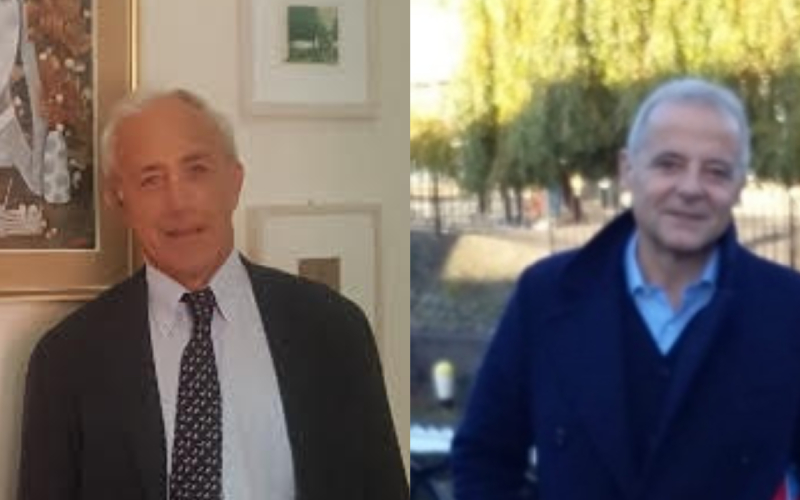
Episode 133: International Commentaries on the State of our Field with Fred Busch, Ph.D. (Chestnut Hill, Mass.)

“I’ve long had concerns about the practice of psychoanalysis and that the theory underlying it has become a veritable Tower of Babel. We have these multiple views where everything is accepted as ‘psychoanalysis,’ but they really can’t be because they’re very different models and they call for very different things. I also feel that our…

Read More

Episode 132: ‘Children Exposed to Pornography: the Erosion of Latency with Franco D’Alberton, Ph.D. & Andrea Scardovi, MD, Ph.D. (Bologna)

“They interviewed more than 6,000 American parents and their children from ages eight to thirteen. They wanted to identify what the perception and realities were of the parents’ use of technology. It is important to know that about one-third of the children said that their parents spent equal or less time with them than in…

Read More

Episode 131: ‘Music Sounds the Way Emotion Feels’: from the Piano to the Couch with Julie Nagel, PhD (Dexter, Michigan)

 “Some of the shared concepts – even words that psychoanalysis and musicians use – such as conflict, ambiguity, silences, dissonance, resolution or not, working through, is in the Mozart you’ve heard. What you hear in the very opening four measures was worked through this entire sonata, it was thematic. If we play the whole sonata,…

Read More

Episode 130: ‘Wearing the Attributes’ – 50 years as an Analyst with Judith Chused, MD (Washington, DC)

“A child [patient] makes a mistake, upsets things – one doesn’t console or complain, but just reflects whatever the patient’s affect was at that moment, such as, ‘that seems to bother you’ or ‘it’s hard to put those two pieces together’- to just observe it, to not have an affective response of disgust or irritation….

Read More

Episode 129: From Immunology to Psychoanalysis: Reflections on Primitive Mental States with Shiri Ben Bassat (Tel Aviv)

“This is the first time that I really felt what is meant by cell relations. You have object relations and you have part-object relations and anxieties that are depressive and schizophrenic. But when I deal with primitive anxieties, I really felt cell relations. What I felt is that my cells were going beyond my skin…

Read More

Episode 128: Freud Encounters C.S. Lewis as imagined by Mark St. Germain

“[in the play Freud’s Last Session]… with the sound of the bombers both men react as they did the first time – with fear. But this time instead of disguising it they admit to it. That admittance was the bond between them. Freud also was shaken by the whole experience. At the very end of…

Read More

Episode 126: Can Psychoanalysis be Identical Everywhere? with Jorge Bruce (Lima)

“Psychoanalysis is a translation of what I call in Spanish, Psicoanalisis Criollo, which means that we are hybrid cultures in Latin America, and that is something that we should never forget. We have been acting in the Psychoanalytical Society for so long as if we were living in some big modern city of the first…

Read More

Episode 123: Teaching Dynamic Therapy through Storytelling with Anne Adelman, Ph.D. (Chevy Chase, MD) and Kerry Malawista, Ph.D. (Potomac, MD)

“When I first started teaching it was most often done through theory, and teaching these complicated words with hard-to-understand concepts. It never made sense to me, to be honest, as a student myself. So, when I began teaching, I would tell stories whether they were about my own life or about my children as a…

Read More

Episode 116: “Nothing is Unimportant” – Contemporaneous Records of Mass Trauma: The Ringelblum Archive with Samuel Kassow, PhD

“The Archive begins in 1940. The Germans themselves do not decide they are going to murder all the Jews, they don’t decide on the Final Solution until late 1941. When the archive begins, Ringelblum is creating the archive in order to do what Max Weinreich was doing with the YIVO [Yiddish Scientific Institute] – that…

Read More

Episode 114: The Analyst’s Early Experiences: Emerging Themes in Theory and Practice with Karen Maroda, PhD

“We are chosen [as children] for the roles of peacekeeper, soother, and possibly entertainer at times, because we temperamentally have been gifted with a certain degree of empathy, sensitivity, and psychological mindedness that was not true of our siblings. There is a reason why we’ve been chosen, and it is because of our innate abilities….

Read More