Episode Archives

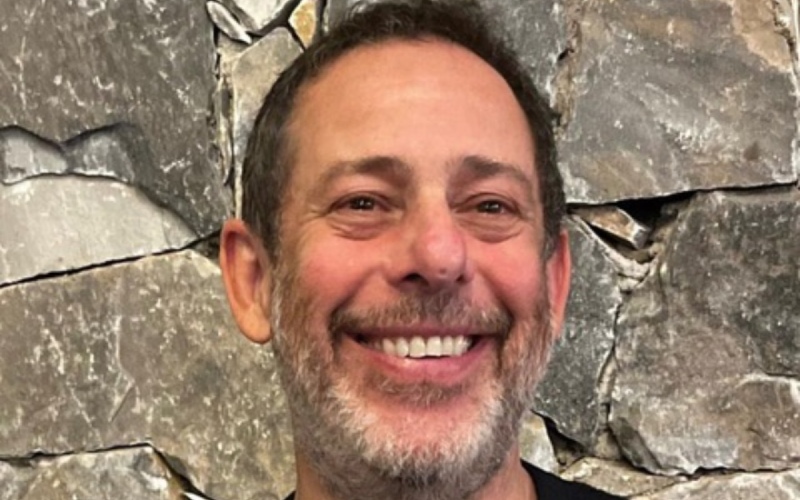
Episode 188:  Analysts’ Reflections on Their Parenting with Andy Cohen (Johannesburg)

“I was quite protective of the parent reader while I was editing this. I feel that so many of the books out there on the shelf have a real kind of finger wagging quality to parents. They kind of tell parents what to do, what not to do, mostly what they’re doing wrong. I  felt…

Read More

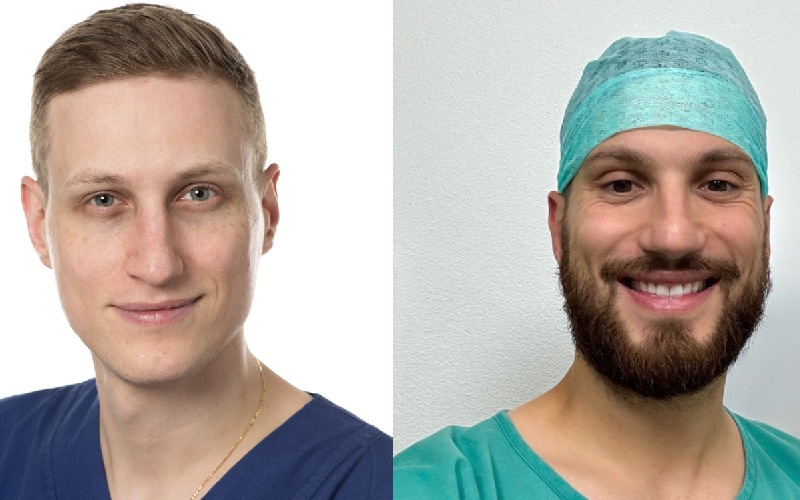
Episode 187:  From Reacting to Reflecting: “How Psychoanalysis Made Us Better Surgeons” with Mauro Vasella, MD and Flavio Vasella, MD, PhD (Zurich)

“I have had quite some reactions to the article [on their psychoanalyses]. I was also telling Mauro and my colleagues that out of quite a number of articles I’ve published on maybe more pressing issues in the field of cancer research, for example, brain tumor research that I’ve spent quite some time with, I think…

Read More

Episode 186:  ‘Why is This Happening in My Body’?: the meeting of/between patients’ imaginings and analysts’ theories with Sharone Bergner, PhD (New York)

“I really think that the purpose is to make space for the unknown, uncertainty, and for our kind of humility in the face of the complexity of our belonging to the physical world. So it’s our animality, our physicality, all of that is so complicated and difficult to grapple with. The unknown is uncontrollable and…

Read More

Episode 185:  Affairs: Exploring the Dynamic Mind with non-Clinical Readers with Juliet Rosenfeld (London)

“The subject of affairs, I think it’s of interest to everybody. We have all had an Oedipal experience – we’ve all been babies that have at some point realized that we are not the only person. We’re not perfectly fused with our mother, and that she has other things to do, and there may be…

Read More

Episode 184:  Affects, Curiosity and Corporal Punishment with Paul Holinger, MD, MPH (Chicago)

“Now’s the time to tell that wonderful story of the little boy. He was about two or three years old, and he went in the icebox to get some milk, and he managed to get this big carton and spill it all over the floor. Now, needless to say, there’d be a lot of parents…

Read More

Episode 183:  The ‘Necessary Foreignness’ of Psychoanalysis with Mariano Horenstein, PhD (Cordoba, Argentina)

“In the analysis, the place where you face the experience of otherness, of foreignness, of the unconscious that goes through you, it doesn’t appear as knowledge. Of course, in an analysis, you get a lot of knowledge, but it’s not an important aspect of an analysis. I think that in the analysis, and that’s the…

Read More

Episode 182:  Care of a Former Analysand with Dementia with Maxine Anderson, MD (Seattle, Washington)

“I think that my analytic awareness of denial and projection and the concreteness of psychic reality when executive function wanes, that I could help the other caretakers to understand some of what was going on – to give them a way to understand that relieves their sense of frustration and uncertainty. I think that the…

Read More

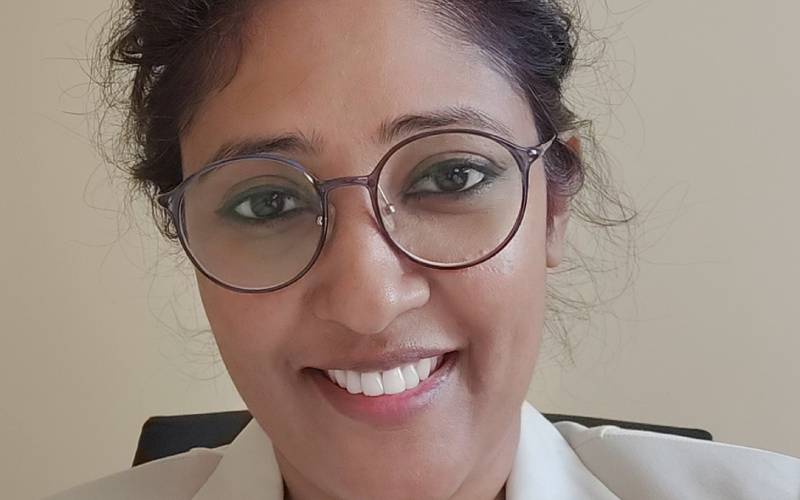
Episode 181:  Before ‘Ghosts’ become ‘Ancestors’ with Shalini Masih, PhD (Worcestershire, UK)

“All of this together shaped how I began to think about mind, not as something to be mastered, but as a landscape of the unspoken whether it was ghosts or griefs or desires that were hard to relinquish. I saw that the ghost was not always an ‘other’. It was often intimate, tied to lost…

Read More

Episode 180:  Candidates’ Reflections on their Psychoanalytic Training with Himanshu Agrawal, MD (Milwaukee, Wisconsin)

“The theme that I found with IPSO [International Psychoanalytical Studies Organization] was that there was a common theme [in psychoanalytic training].  There was an initial phase full of terror and excitement, and then a middle phase of maybe some lethargy or apathy or disillusionment. In that middle phase, many candidates found IPSO, or IPSO found them,…

Read More

Episode 179:  Reflections on Our Changing Field with Stefano Bolognini, MD (Bologna)

“When we reconstruct [in a patient] a possible lacking object or role or function, we  see that if the analyst himself has been able and the patient allowing him to be able to enter to a deep level the objective reality of the internal world of the patient, it can happen that some new function…

Read More