
“In analytic training, and actually through my own analysis, is really where it happened. I think I just got more of a sense that whatever was going on with my students and the parents of my students was maybe not about me. It might not be all up to me, and something about that really freed me up to do better work. Another way I’ll describe what you’re talking about is that I had an adult violin student several years ago, and she wanted me to explain everything. And I said, “Well, I can. Do you want to learn how the violin is played, or do you want to learn how to actually play the violin?” Those are two very different things to me. I feel like what happened in the course of my analytic training, in the course of my own analysis, is I learned how to play the violin. The pre-stuff to that was about how analysis is done, but I actually learned how to do it and how to be it by going through it.
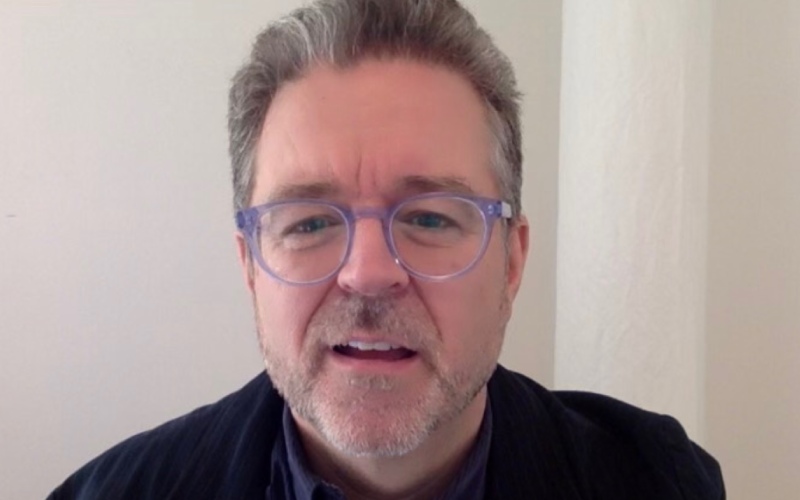
Edmund Sprunger, MSW
St. Louis
Episode Description:
We begin Ed’s musical journey with his describing the importance of his musical family and community on his interest in learning to play an instrument. When watching his older sister play piano, he discovered the feeling of I want to do that. He pursued violin playing and studied with Shin’ichi Suzuki in Japan. He then returned to the States and in an effort to better appreciate his young students’ experiences, he immersed himself in the world of developmental psychology and earned an MSW. Later he would pursue analytic training at the St. Louis Psychoanalytic Institute. This training enabled him to actually become an analytic clinician rather than learning about analysis. We discuss how his clinical work influenced his work as a music instructor, helping him consider “who I become to the student in the lesson.” He shares with us the many mentors who have inspired and educated him in his two careers. It was when observing senior colleagues’ nuanced analytic ways of thinking that he discovered anew his experience of I want to do that.
Linked Episodes:
https://ipaoffthecouch.org/2020/05/31/episode-54-theres-a-real-person-in-there-reflections-on-a-life-in-psychoanalysis-with-warren-poland-md/
Episode 131: ‘Music Sounds the Way Emotion Feels’: from the Piano to the Couch with Julie Nagel, PhD (Dexter, Michigan)
Our Guest:
Edmund Sprunger, MSW is a psychoanalyst in private practice in St Louis. He holds a Masters in Social Work from the University of Michigan and trained at the St. Louis Psychoanalytic Institute, where he currently serves as its Director of Community Education and teaches in the institute’s Advanced Psychodynamic Psychotherapy program. In 2018, he became the first recipient of the Institute’s Lynne K. Moritz, MD Leadership Award. In addition, he has been an APsaA “Teachers’ Academy” and “Psychoanalyst in the Community” fellow.
He has taught violin for over 40 years, including over 300 workshops, lectures, and master classes throughout the world. He holds a BA in music from Goshen College. He also studied violin and violin pedagogy with Shin’ichi Suzuki, founder of The Suzuki Method, at his school in Matsumoto, Japan. He is the author of numerous articles in music education journals. His books, Helping Parents Practice: Ideas for Making It Easier (Vol. 1) and Building Violin Skills: A Set of Plans Designed to Help Parents and Children Construct Positive Practices, are available from yespublishing.com.
Recommended Reading:
McDonald, M. (1970). Transitional tunes and musical development. The Psychoanalytic Study of the Child, 25(1), 503–520.
McDonald, M. (1970). The Suzuki Method, Child Development, and Transitional Tunes. American String Teacher, 20(1), 24–29.
Nagel, J. J. (2017). Managing stage fright: A guide for musicians and music teachers. Oxford University Press.
Suzuki, S., Selden, K., & Selden, L. (2013). Nurtured by love (Revised edition): Translated from the original Japanese text. Alfred Music.
Suzuki, S. (1982). Where love is deep: The writings of Shinʼichi Suzuki (K. Selden, Trans.). Talent Education Journal.